15 Jul Indigenous Pollinator Design: A Nature Positive Strategy for Property Developers
As Australia moves towards a nature-positive future with ongoing changes to the Environment Protection and Biodiversity Conservation (EPBC) Act, Australia’s property sector is under increasing pressure to deliver not just high-quality developments, but projects that actively protect and enhance biodiversity. With these changes, sustainability has become a central focus in the property sector, giving developers a unique opportunity to align their projects with emerging environmental standards while also contributing to Australia’s ecological resilience. One simple, yet powerful way developers can meet this challenge is by incorporating indigenous pollinator-friendly design.
What are indigenous pollinators?
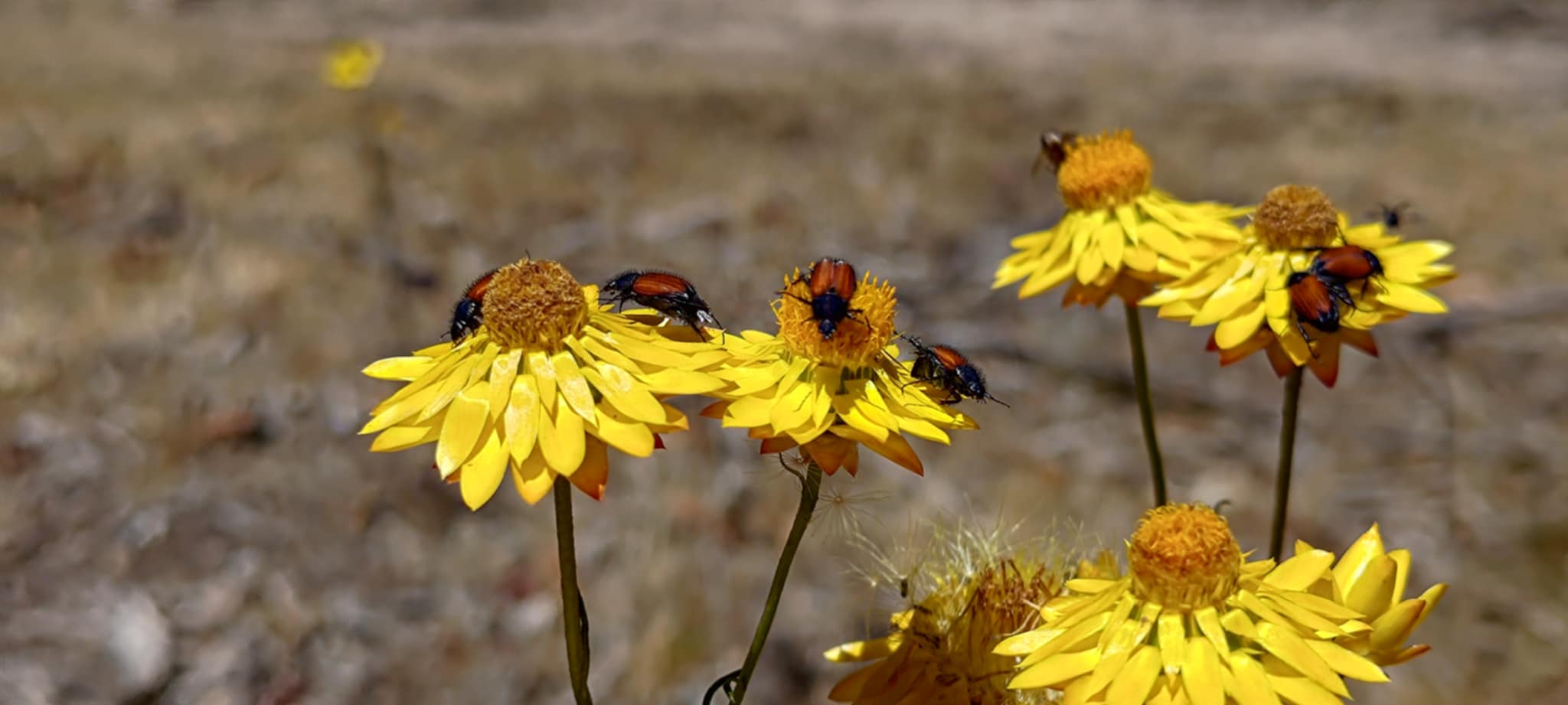
Australia is home a hugely diverse suite of indigenous pollinators, including bees, beetles, butterflies and many other invertebrates, even birds and mammals like the eastern pygmy possum. Many native pollinators are highly specialised. The grey-headed flying fox, for example, can help ecosystems recover from natural disasters like bushfires. The exact number of indigenous pollinators on the continent is unknown, but the figure is likely very high. Approximately 320,000 invertebrate species can be found in Australia, many of which are pollinators, including our more than 1,700 busy species of pollinating bees.
Pollinators help with plant reproduction through fertilisation by transporting pollen from one plant to another. Because of this, pollinators are vital to the ongoing survival of trees, shrubs and grasses, which provide habitats for local wildlife, improve soil stability, and aid in urban cooling.
What is indigenous pollinator-friendly design?
Using indigenous plant species in a development’s landscaping is an important part of pollinator-friendly design, but to ensure the long-term success of your design, you need to think beyond the species of plants. Here are some other things to consider when designing to attract indigenous pollinators:
Design Vertically
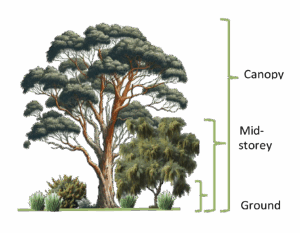
Landscaping often focuses on either low ground cover or tall canopy cover. The middle layer (the mid-storey), namely shrubs and graminoids (grass-like plants), areis essential for many native animal and insect species that use this space for nesting, refuge and foraging. Having a combination of ground, mid-storey, and canopy cover helps create a richer, more diverse habitat that both supports and attracts indigenous pollinators. Design should incorporate a range of grasses, other graminoids, flowering herb and shrubs, to provide a range of habitats to attract pollinators.
Some examples of mid-story plants indigenous to the Melbourne area include:
- Sticky Everlasting (Xerochrysum viscosum) – attracts invertebrates such as hoverflies
- Cut-leaf Daisy (Brachyscome multifida) – attracts invertebrates a varierty of invertabrates
- Hop Goodenia (Goodenia ovata) – attracts a variety of invertebrates
- Black-anther Flax-lily (Dianella revoluta var. revoluta) and other Flax-lily species (Dianella spp.) – attract invertebrates such as bees
- Rosemary Grevillea (Grevillea rosmarinifolia) and other Grevillea species – attract birds and invertebrates
- Egg and Bacon Peas such as Bossiaea, Daviesia, Dillwynia, Eutaxia, Platylobium and Pultenaea species – attract a range of invertebrates and also provide some foraging habitat for small birds
- Common Correa (Correa reflexa var. reflexa) and other Correa species – attract birds
- Common Tussock-grass (Poa labillardierei) – provides refuge habitat for invertebrates
- Common Wallaby-grass (Rytidosperma caespitosum) – provides refuge habitat for invertebrates
- Rough Spear-grass (Austrostipa scabra) – provides refuge habitat for invertebrates
- Kangaroo Grass (Themeda triandra) – provides refuge habitat for invertebrates
It should be noted that each region contains a different suite of indigenous pollinators. A useful guide to many areas of Australia can be found here.
Design for Life Cycles
Pollinators need more than just flowers. A truly successful design will incorporate elements for each stage of the life cycle. These can include nesting sites, such as bare patches of earth and dead wood; host plants for larvae; and water sources. Sweet Bursaria (Bursaria spinosa), for example, simultaneously provides an egg-laying site (roots) and larvae food (leaves) for the Eltham Copper Butterfly, while also attracting Notoncus ants. Features such as bee hotels, as well as bird and bat boxes, boost the resources available for indigenous pollinators at different life stages, making it more likely there will be welcome residents in your landscape. Ultimately, landscaping should provide a range of indigenous plant species from a range of life forms (grasses, shrubs, herbaceous flowers), and incorporate a range of substrates (wood, gravel, sand, stone) to provide habitat for the largest variety of pollinators possible.
Design for Succession
Indigenous pollinators are active across different times of the year, however many landscapes are designed so that flowering plants bloom all around the same time. This is known as a bloom-and-bust cycle where there are periods of high nectar availability (bloom) followed by periods of no nectar availability (bust). Bloom-and-bust cycles create instability with food sources for pollinators, which long-term can result in unstable populations. To avoid this, it’s important to plant a diverse range of native species that flower throughout the year. Winter-flowering species are an important resource. Some winter-flowering species are listed below:
- Common Correa (Correa reflexa)
- Spiny Rice-flower (Pimelea spinescens)
- Common Heath (Epacris impressa)
- Coast Banksia (Banksia integrifolia)
- Bushy Needlewood (Hakea decurrens)
- Prickly Moses (Acacia verticillata)
- Silver-leaf Stringybark (Eucalyptus cephalocarpa)
Design for Connection
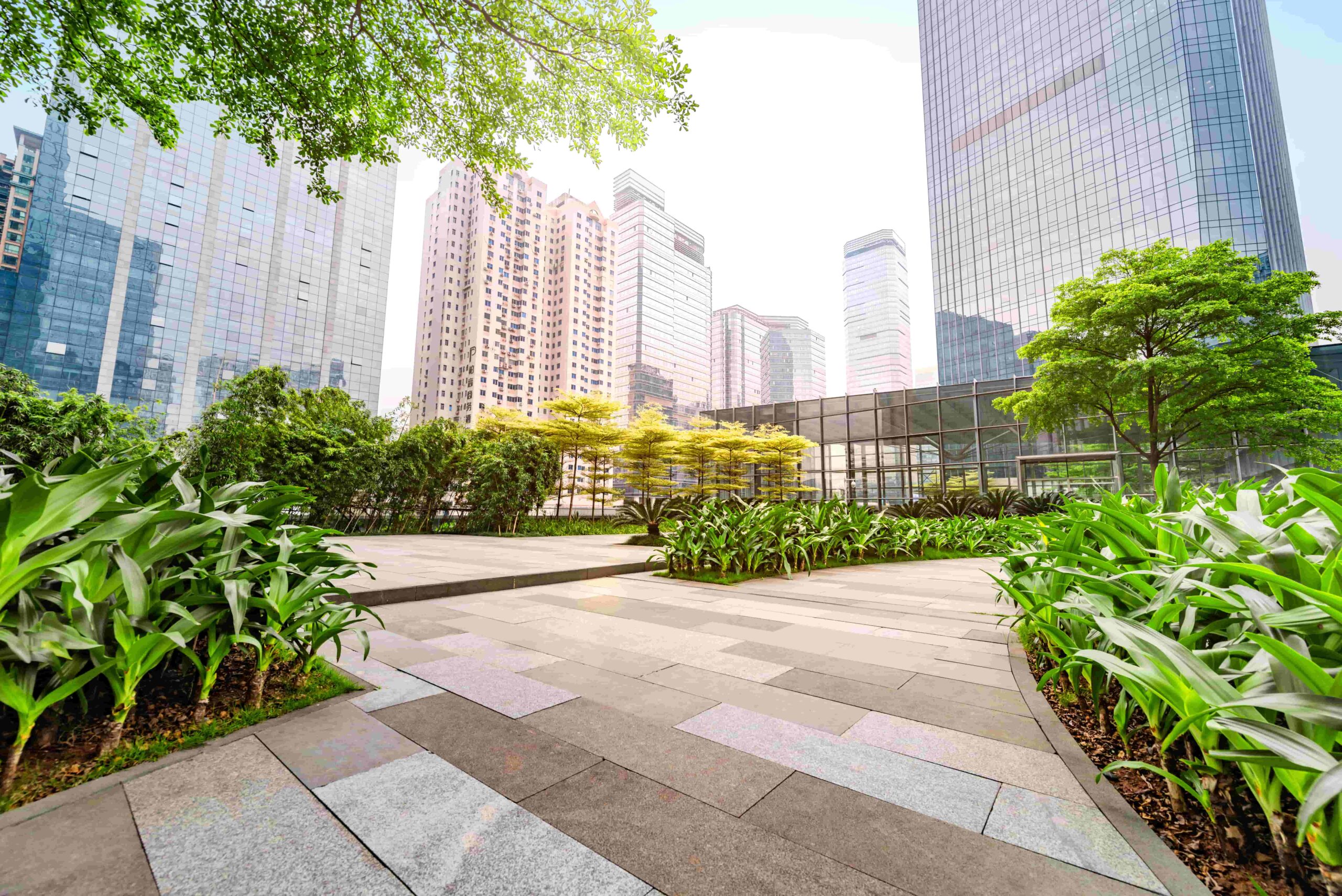
Pollinators need to move freely across the landscape to access food, nesting sites, and mates. Many urban developments unintentionally create islands of green space surrounded by hard surfaces like pavements. These pockets of green provide short-term benefits for pollinators, but don’t support the connectivity that they need to thrive.
Biodiversity-friendly Management
Once your development and associated green spaces are developed, it is important to use practices that foster biodiversity. The impacts of pesticide use on Australian indigenous invertebrates and ecosystems has been devastating. Pesticide use has been a large factor leading to an estimated 1-3 invertebrate species extinctions per week. As such, management should avoid the use of pesticides in pollinator-attracting areas. In the broader landscape, use of broad-brush pesticides should be limited and targeted methods should instead be used.
As Australia’s property sector adapts to new environmental regulations, embracing indigenous pollinator-friendly design offers a practical and impactful way to contribute to biodiversity conservation. By thinking beyond simply planting native species developers can create thriving ecosystems.
Get In Touch
Unsure how to integrate indigenous pollinator-friendly design into your project?
Contact us for practical advice and strategies that deliver lasting ecological benefits, support Australia’s Nature Positive goals, and help ensure your development meets evolving environmental standards.